
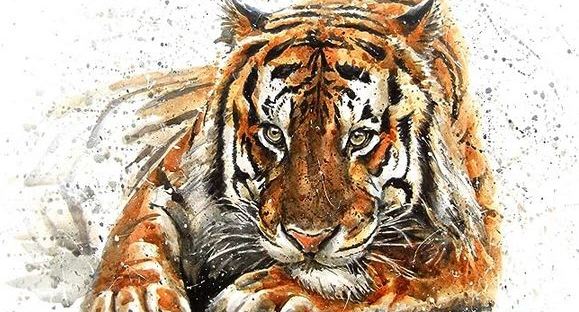
International Tiger Day aka Global Tiger Day is celebrated annually to raise awareness for tiger conservation, held on 29 July. The goal of commemorating this day is to promote a global system for protecting the natural habitats of tigers and to raise public awareness and support for tiger conservation issues.
Here are some fascinating facts about this incredible striped mammalian member of the Cat family:
- Tigers are the largest cats on Earth. They can weigh up to 720 pounds (363 kg) and stretch 6 feet (2 meters) long. While not quite as tall as a male lion, a male tiger is heavier and longer.
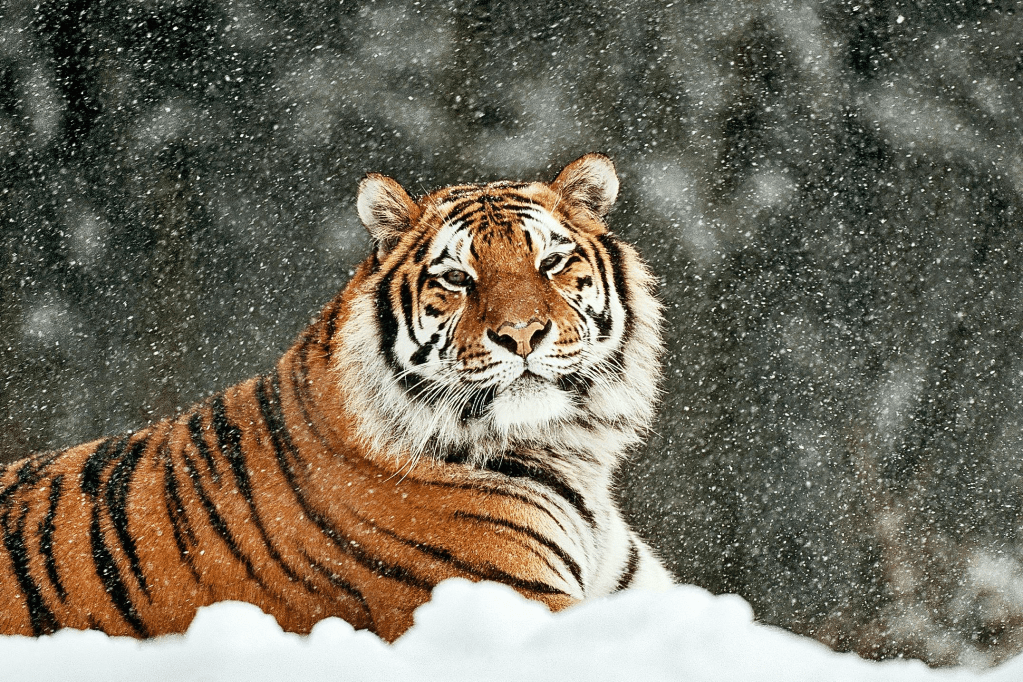
- The Siberian tiger is the biggest of all tigers.
- The tiger is the national animal of both India and Bangladesh.
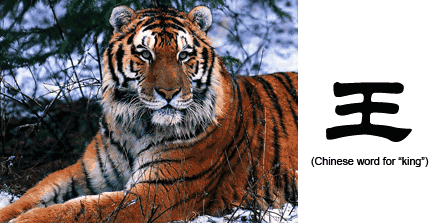
- The stripes on the forehead of a tiger can look like the Chinese character that means “king.”
- A tiger’s back legs are longer than its front legs, which makes it a running, jumping, and pouncing machine.
- Tigers have over 100 stripes, which helps the tiger blend in with long grass. Like fingerprints, no two tigers have the same pattern.
- Less than 100 years ago, tigers roamed over much of Central, South, and Southeast Asia and were even found in Turkey. Now, they are found only in parts of South and Southeast Asia, China and Eastern Russia.
- A group of tigers is called a streak or an ambush.
- A tiger’s upper canine is about 4 inches (10 cm) long, which is about the size of a man’s finger.
- A tiger can eat nearly 1/5 of its body weight in one meal—about 88 pounds (40 kg). In one year, an adult male tiger can eat up to 8,000 pounds of meat.
- A Siberian tiger has almost 20,000 hairs per square inch, or about 3,000 hairs in a single sq. cm of skin.
- While the tiger is an expert hunter, only one in every 20 hunts ends in a kill. In areas where prey is scarce, even fewer hunts are successful.
- The Sundarbans swamp forest on the border of India and Bangladesh is the tiger-attack capital of the world. Approximately 600 Bengal tigers live there, and they kill up to 100 people each year.
- Nearly 50% of tiger cubs die before they reach one year old, often because their mothers have been shot.
- A tiger’s roar can be heard over 2 miles (3 km) through a forest.
- A tiger can kill instantly with a single bite to the neck through the spinal cord. A tiger can also suffocate its prey by squeezing its throat for up to 10 minutes.
- A tiger’s claws can grow up to 4.7 inches (12 cm) long.
- The Sumatran tiger is the smallest tiger. A male weigh about 265 pounds (120 kg), which is about the same as a female lion.
- A captive tiger can live up to 20 years. Wild tigers live between 10 and 15 years.
- Scientists believe that the white spots behind the ears of a tiger help tiger cubs follow their mothers through the shady forest. The white spot is called an “ocelli.”
- The Siberian tiger has fewer stripes than the Bengal tiger, and its stripes are brown rather than black.
- There are almost as many tigers living in zoos and wildlife parks as there are in the wild.
- Despite conservation efforts, the Siberian tiger could become extinct in the wild in the next ten years.
- The Latin name for the tiger is Panthera tigris. The word Panthera is from the Greek word meaning “hunter,” while tigris is an Old Persian word meaning “fast” or “arrow-like.”
- A fully-grown tiger can leap over 9 yards (8 m) and jump up to 5 yards vertically (5 m).
- A tiger spends about 18 hours a day sleeping.
- A tiger’s paw print is called a “pug mark.”
- The South China tiger has the fewest stripes, while the Sumatran tiger has the most.
- Tigers don’t only have striped fur; they also have striped skin.
- A tiger’s tongue is so rough that it can scrape the meat off its prey.
- A tiger’s saliva is an antiseptic. It is useful for cleaning their wounds.
- A tiger’s night vision is 6 times better than of a human.
- A tiger’s tail helps it balance while its running. Its tail can be up to one-third of its body length.
- Because tigers usually attack their prey from the side or rear, some people living in rural India wear masks on the back of their heads.
- One hundred years ago, there were eight different subspecies of tiger. Today, three of those subspecies are extinct and others are dangerously close to being wiped off the Earth forever.
- Bengal tigers are the least endangered of the tigers, with approximately 2,000 left in the world.
- Over the past one hundred years, over 95% of the tiger population has disappeared, leaving just 5,000 tigers in the world today. Their population is still decreasing due to poaching and habitat loss.
- The earliest tiger fossils are 2 million years old.
- Unlike other cats, tigers like to be near water. The Sumatran tiger has webbed feet, which makes it an especially skilled swimmer.
- Black (melanistic) tigers exist, though none live in captivity.
- Tigers are called “hypercarnivores,” which means they live exclusively on meat. Tigers eat cows, birds, monkeys, lizards, crocodiles, and even small elephants. Their digestive systems simply cannot digest fruit, plants, or insects.
- Tigers can run as fast as 35 mph, but only for short distances. Most of their prey can outrun them, especially deer and antelope.
- Throughout the world, the tiger has been a symbol of power and a fighting spirit.
- Each tiger has its own scent due to individualized scent glands.
- Tigers, like all cats, cannot taste anything sweet.
- Tigers cannot purr. When they are happy or feel safe, they squint or close their eyes.
- Tigers have the largest brain of any carnivore, except the polar bear.
- Because of their immense size, tigers can starve to death within two to three weeks. It takes about 30–40 days for a human to starve to death.
- The Bali tiger was purposely hunted to extinction in Bali because it was viewed as evil. The Javan tiger and Caspian tigers were also hunted to extinction.
- Domestic cats share about 95.6% of their DNA with tigers, from which they diverged on the evolutionary tree approximately 10.8 million years ago.
- Due to their rough tongue bristles, tigers do not lap up water like many other animals. Instead, they cup the back of their tongue to flick water droplets into their mouths.
- Unlike lions, who will fight to the death over a kill, tigers often share meals and take turns eating.
- Tasmanian tigers are not big cats. They are marsupials (like kangaroos).
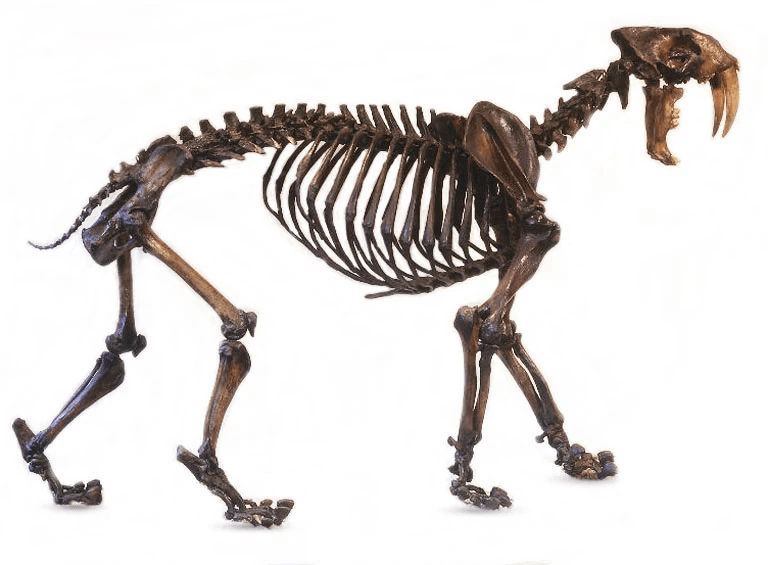
- Modern-day tigers did not descend from prehistoric sabre-tooth tigers. In fact, the two are not closely related.
Discover more from Vigyan Setu Foundation
Subscribe to get the latest posts sent to your email.


Very useful information about tigers..
LikeLike
Nice information
LikeLike
Tiger have good night vision ..tiger don’t feel any taste like sugar and bitter …all information about tiger like it’s species ,dna ,brain ,fossils are very interseted to read
LikeLike
The tiger is a wild animal. Its scientific name is Panthera tigris. It belongs to the family “Felidae” and is the largest living species of cats. Its appearance is distinct with its outer body covered with orange-brown fur with black stripes running vertically on
LikeLike
shriwask06@gmail.com dhagarnala dharamjaigarh
LikeLike
Stop hunting Tigers
LikeLike
Vast information about Tigrrs
LikeLike
Informative and guides us to save precious tiger and nature
LikeLike
Tigers play key role in maintaining ecological balance so we must save it
LikeLike
That is so nice and knowledgeable 🙂
LikeLike
This is very nice and knowledgeable
LikeLike
stop Hunting and save tigers
LikeLike
information bank on tigers
LikeLike
From this we learned very nice things about tiger
LikeLike
We get very useful knowledgeable points about tiger
LikeLike
We should not kill the tiger because there are very less tiger
LikeLike
Tiger🐯
LikeLike
I’m try this vebside
Wellcome
LikeLike
I’m try this website
…
Nice
LikeLike
Amazing 👏🙀
LikeLike
Save tigers
LikeLike
Stop hunting and save tigers
LikeLike
Ghfjc
LikeLike
Stop hunting tigers
LikeLike
Gursharn singh
LikeLike