
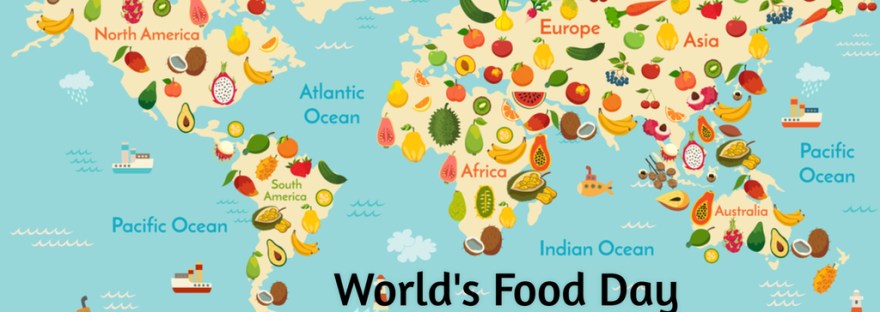
World Food Day is celebrated every year on 16 October. We all have a role to play to realize the vision of a world without hunger and malnutrition. We must not let sustainable habits fall by the wayside in times of crisis. We can make healthy food choices and do our part to reduce food waste. In addition, governments, enterprises, and organizations can share their knowledge and support sustainable, resilient food systems and livelihoods. Together, we can grow, nourish, and sustain our world.

World Food Day 2023 Theme:
Water is life, water is food. Leave no one behind.
Water is essential to life on Earth. It makes up over 50% of our bodies and covers about 71% of the Earth’s surface. Only 2.5% of water is fresh, suitable for drinking, agriculture, and most industrial uses. Water is a driving force for people, economies and nature and the foundation of our food. Indeed, agriculture accounts for 72% of global freshwater withdrawals, but like all natural resources, fresh water is not infinite.
Rapid population growth, urbanization, economic development, and climate change are putting the planet’s water resources under increasing stress. At the same time, freshwater resources per person have declined 20% in the past decades and water availability and quality are deteriorating fast due to decades of poor use and management, over extraction of groundwater, pollution and climate change. We risk stretching this precious resource to a point of no return.
Today, 2.4 billion people live in water-stressed countries. Many are smallholder farmers who already struggle to meet their daily needs, particularly women, Indigenous Peoples, migrants, and refugees. Competition for this priceless resource is increasing as water scarcity becomes an ever-increasing cause of conflict.
Around 600 million people who depend, at least partially, on aquatic food systems for a living are suffering the effects of pollution, ecosystem degradation, unsustainable practices, and climate change.
Water is life.
Nourishing humanity from the ancient past to the future.
Water is finite but it is an infinitely valuable natural resource. Without it, there would be no food and no life.
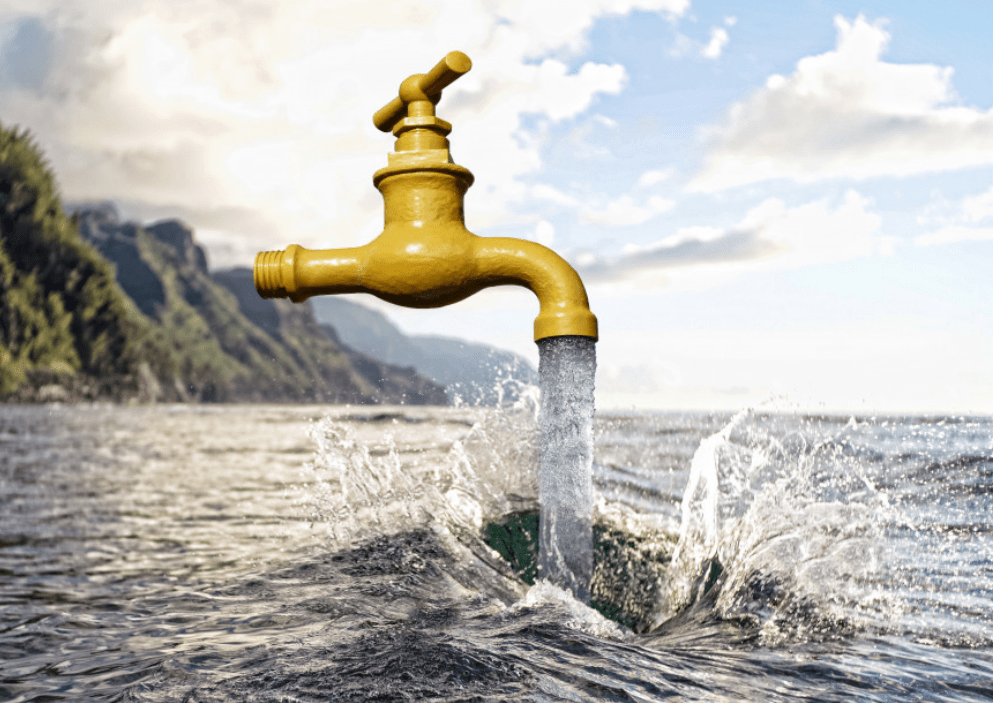
Centuries ago, the inventive nature of humankind spurred farmers to discover ways to irrigate crops, giving birth to agriculture and sedentary communities. This revolutionized how people produced food and gave rise to different civilizations around the world. It was not by chance that the first civilizations in Mesopotamia and Egypt flourished around this precious resource by developing on the banks of rivers and on the rich soils of floodplains. From the Tigris and Euphrates rivers that nurtured Sumerian, Assyrian and Babylonian kingdoms, the Nile that fostered the kingdom of Egypt, to the Indus, Blue and Yellow rivers in India and China. The cradles of civilizations may be different, but their early beginnings all start with water.
From antiquity to the present, communities have been directly influenced by the quality and quantity of water. In fact, to ensure an adequate supply of drinking water in the regions where they have settled, people developed innovative ways of treating and managing it.
Today, irrigation may not seem exciting, but centuries ago, this method was one of the major inventions that transformed agriculture, especially in areas where climatic conditions were harsh and rainfall was rare.
In ancient Greek and Chinese records, there is evidence of another incredible technological milestone in our history: the discovery of desalination. This marked the capacity to collect drinkable water from salt water of the seas and ocean, allowing for a new source of water supply. Water was, and still is, essential for agricultural productivity, contributing significantly to food security. Making water safe and accessible to everyone, leaving no one behind, is still an issue that concerns us today.
There are few places on Earth where water is more accessible in adequate amounts to meet the needs of people. The availability, absence, or scarcity of water has marked the whole history of humankind, and it continues to be one of the most pressing concerns that people must confront today. As the world’s population is expected to reach over 9 billion by 2050, it has never been more necessary to feed the world’s growing population healthily, equitably, and sustainably.
There are several water concerns that we, as a global community, face, such as water shortage, water pollution, and an uneven distribution of water resources.

To address today’s water challenges, we must ensure effective water usage in agrifood systems, find safe ways to re-use wastewater, safeguard our waters and aquatic food systems, and provide affordable nutritious food for everyone in the face of climate change and increasing demand.
Each challenge is connected, and we must face them together.
New solutions to water shortage and security must be found through science and innovation while also harnessing traditional knowledge. Partnerships and cooperation are also vital to guarantee access to safe water and, by extension, food security. Everyone has a role to play.
Water connects us; it is our shared history, present, and future.
Discover more from Vigyan Setu Foundation
Subscribe to get the latest posts sent to your email.

