
The purpose of World Tsunami Awareness Day (WTAD) is to raise awareness about reducing tsunami-related risks and enhance community preparedness. In 2023, the theme of WTAD will mirror the theme of the International Day of Disaster Reduction: Fighting inequality for a resilient future. Activities will explore the reciprocal relationship between tsunamis and inequality: how inequality makes tsunamis more dangerous for certain populations and how the aftermath of a tsunami can drive vulnerable people further into poverty and exacerbate inequality.
Like all disasters, tsunamis have an unequal and unique impact on the affected population. Poverty levels, exposure, discrimination and other vulnerabilities all play a key role in determining who is likely to be affected and how. For example, following the Indian Ocean tsunami of 2004 that affected 12 countries, it was found that poor households were more likely to see their “flimsy houses” wash away, while the brick houses of richer households proved sturdier.
In 2022, United Nations Office for Disaster Risk Reduction (UNDRR) launched a new WTAD initiative – the #GetToHighGround campaign – to activate citizens through participation in a drill, a run, or a walk along tsunami evacuation routes. These activities raise awareness about reducing tsunami risk while helping communities to prepare their own tsunami resilience. The events are an inclusive and engaging way to involve all people in raising tsunami risk awareness.
The #GetToHighGround campaign calls for a culture of tsunami and coastal hazards awareness for all people at risk. The campaign also emphasizes the importance of understanding our risk and investing in action that both reduces risk and prepares us for future tsunami and coastal hazard risk reduction.
Tsunamis must be treated as multi-dimensional hazards. They threaten human life, but also disrupt livelihoods, industry, agriculture, gender equality, and critical services such as education and healthcare. These cascading risks can reverberate across sectors, geographies, and societies. Access to high quality, readily available information is key for supporting national mechanisms and local preparedness, and to enhancing awareness about early warning systems.
Here are some interesting facts about tsunami
- A tsunami is a series of ocean waves caused by an underwater earthquake, landslide, or volcanic eruption. More rarely, a tsunami can be generated by a giant meteor impact with the ocean. These waves can reach heights of over 100 ft.
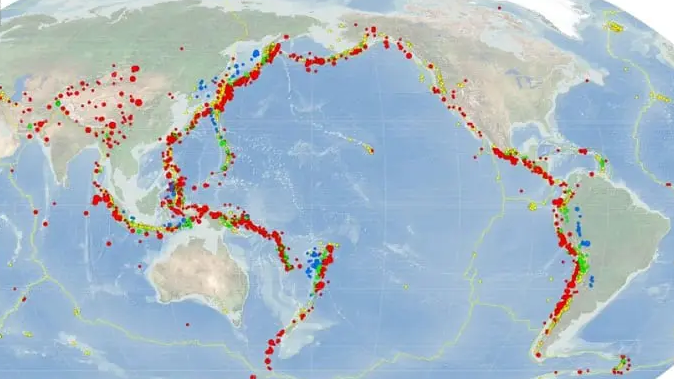
- About 80% of tsunamis happen within the Pacific Ocean’s “Ring of Fire.”
- The first wave of a tsunami is usually not the strongest, successive waves get bigger and stronger.
- Tsunamis can travel at speeds of about 500 miles or 805 kilometres an hour, almost as fast as a jet plane.
- The states in the U.S. at greatest risk for tsunamis are Hawaii, Alaska, Washington, Oregon, and California.
- If caught by a tsunami wave, it is better not to swim, but rather to grab a floating object and allow the current to carry you.
- Tsunamis retain their energy, meaning they can travel across entire oceans with limited energy loss.
- Tsunami means “harbour wave” in Japanese (tsu = harbour + nami = wave), reflecting Japan’s tsunami-prone history.
- Scientists can accurately estimate the time when a tsunami will arrive almost anywhere around the world based on calculations using the depth of the water, distances from one place to another, and the time that the earthquake or other event occurred.
- Hawaii is always at great risk for a tsunami – they get about 1 per year and a severe one every 7 years. The biggest tsunami that occurred Hawaii happened in 1946, the coast of Hilo Island was hit with 30 ft waves at 500 mph.
- In 2004, the Indian Ocean tsunami was caused by an earthquake with the energy of 23,000 atomic bombs. After the earthquake, killer waves radiating from the epicentre slammed into the coastline of 11 countries. The final death toll was 283,000.
- Tsunamis are rare events, but they are the deadliest and costliest among all hazards. The 2011 Tohoku Earthquake in Japan cost more than US$235 billion and was the costliest disaster in world history.
- Over 700 million people live in low-lying coastal areas and Small Island Developing States exposed to extreme sea-level events including tsunamis.
- Over the past two decades, tsunamis have accounted for almost 10 percent of economic losses from disasters, setting back development gains, especially in countries that border the Indian and Pacific Oceans.
Discover more from Vigyan Setu Foundation
Subscribe to get the latest posts sent to your email.

