

Diabetes and well-being is the theme for World Diabetes Day 2024-26
In 2007 General Assembly adopted resolution 61/225 designating 14 November as World Diabetes Day. The document recognized “the urgent need to pursue multilateral efforts to promote and improve human health and provide access to treatment and health-care education.” The resolution also encouraged Member States to develop national policies for the prevention, treatment and care of diabetes in line with the sustainable development of their health-care systems.
Diabetes is a chronic disease, which occurs when the pancreas does not produce enough insulin, or when the body cannot effectively use the insulin, it produces. This leads to an increased concentration of glucose in the blood (hyperglycaemia).
Type 1 diabetes (previously known as insulin-dependent or childhood-onset diabetes) is characterized by a lack of insulin production.
Type 2 diabetes (formerly called non-insulin-dependent or adult-onset diabetes) is caused by the body’s ineffective use of insulin. It often results from excess body weight and physical inactivity.
Gestational diabetes is hyperglycaemia that is first recognized during pregnancy.
Diabetes is a major cause of blindness, kidney failure, heart attack, stroke and lower limb amputation. Healthy diet, physical activity and avoiding tobacco use can prevent or delay type 2 diabetes. In addition, diabetes can be treated and its consequences avoided or delayed with medication, regular screening and treatment for complications.

Diabetes and well-being is the theme for World Diabetes Day 2024-26.
With appropriate access to diabetes care and support for their well-being, everyone with diabetes has the chance to live well.
Millions of people with diabetes face daily challenges managing their condition at home, work, and school. They must be resilient, organised, and responsible, impacting both their physical and mental well-being. Diabetes care often focuses only on blood sugar, leaving many overwhelmed. This World Diabetes Day, 14 November, let’s put well-being at the heart of diabetes care and start the change for a better diabetes life.
Here are some interesting facts about diabetes.
Diabetes mellitus is a general name that encompasses several types of diabetes, including Type 1, Type 2, gestational, and variations such as maturity-onset diabetes in the young (MODY) and latent autoimmune diabetes of adulthood (LADA). What they all have in common is the inability to self-regulate levels of blood glucose (cellular fuel) in the body.
The word “diabets” is Greek for “siphon,” which refers to the copious urine of uncontrolled diabetes. “Mellitus” is Latin for “honey” or “sweet,” a name added when physicians discovered that the urine from people with diabetes is sweet with glucose.
Insulin was coined from the Latin insula (“island”) because the hormone is secreted by the Islets of Langerhans in the pancreas.
In 1889, Oskar Minkowski (1858-1931) discovered the link between diabetes and the pancreas (pan – “all” + kreas – “flesh) when a dog from which he removed the pancreas developed diabetes.
Before the discovery of insulin, surgeons rarely operated on diabetic patients with gangrene because the patients typically would not heal and would inevitably die, and physicians would often put their patients on starvation or semi-starvation diets, recommending they eat only foods such as oatmeal.
Some studies have indicated that individuals with diabetes are at much greater risk for developing Alzheimer’s disease and other forms of dementia than are non-diabetics, though the reasons are unknown.
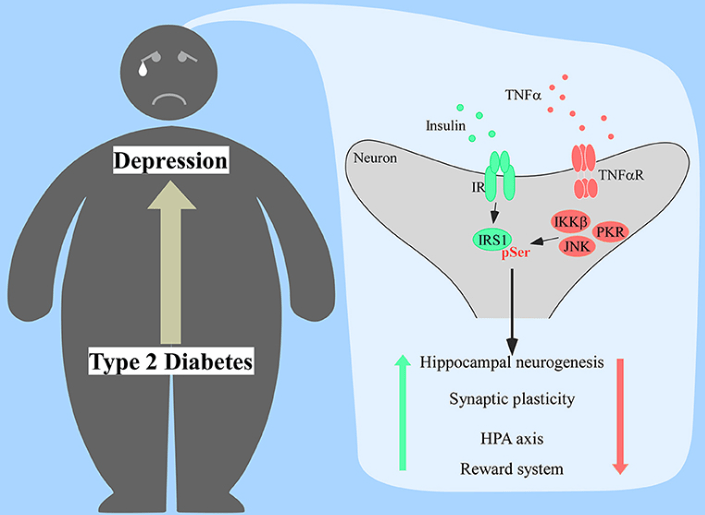
Approximately 90% of people with type 2 diabetes are obese.
Though heart disease has dropped among non-diabetic women by 27%, it has increased by 23% for women with diabetes.
Those with diabetes are more likely to develop carpal tunnel syndrome and tarsal tunnel syndrome.
Those with diabetes, particularly adolescent girls with Type 1 diabetes, may be at increased risk of developing eating disorders. Some adolescent girls purposely withhold their insulin to lose weight.
Individuals who have inherited other genetic syndromes (Down’s syndrome, myotonic syndrome, Turner’s syndrome) are also at risk of developing diabetes.
Diabetics have a higher risk of gingivitis than non-diabetics, which may lead to bone and tooth loss.
Inhaled insulin is an emerging twenty-first century option for people with Type 1 diabetes. Companies are also working on an insulin tablet that can be given under the tongue.
Individuals with diabetes are more susceptible to complications of flu and pneumonia and are six times more likely to be hospitalized for these problems than non-diabetics.
Experts report that diabetes decreases life expectancy by five to 10 years.
Men have a higher risk of death from diabetes than women.
Diabetes insipidus (water diabetes) is a condition completely different from diabetes mellitus. Diabetes insipidus is characterized by a problem with the kidneys in which the kidneys are unable to concentrate urine adequately due to a deficiency in the antidiuretic hormone (ADH).
Overweight individuals are more prone to develop diabetes because more fat requires more insulin, fat cells release free fatty acids which interfere with glucose metabolism, and overweight people have fewer available insulin receptors.
Smoking can increase diabetes risk by constricting blood vessels, raising blood pressure, and stimulating the release of catecholamines (fight-or-flight hormones), which promote insulin resistance.
Insulin in the 1920s was initially extracted from the pancreas of a cow (bovine) or pig (porcine). Today’s insulins are created in the lab, cultured from bacteria and yeast through recombinant DNA.
The human body is equipped with 60,000 miles of blood vessels and wired with 100,000 miles of nerve fibres. Diabetes often blocks the cardiovascular system and deadens nerves, causing 80% of deaths among patients with diabetes.
Researchers found that every two hours spent watching television was associated with a 14% increase in diabetes risk.
Individuals with diabetes are more likely to die from a heart attack than those who don’t have diabetes.
Diabetes is the leading cause of kidney failure, accounting for 44% of new cases in 2005.
About 60-70% of people with diabetes have mild to severe forms of nervous system damage.

A Harvard study showed that eating one serving of cooked oatmeal two to four times a week was linked to a 16% reduction in the risk of developing Type 2 diabetes. One serving five or six times a week was linked to a 39% reduction in risk.
Diabetes is responsible for over one million amputations each year, a large percentage of cataracts, and at least 5% of blindness worldwide.
The World Health Organization (WHO) reports that diabetes has reached epidemic proportions and expects that 80% of all new cases of diabetes will appear in developing countries by 2025.
Every 10 seconds someone dies from diabetes-related causes globally. Every year nearly 3.5 million people in the world die due to diabetes. The death rate is expected to rise by 25% over the next decade.
India has the world’s highest diabetes population with over 35 million people with diabetes. By 2025, this number is expected to swell to 70 million, meaning every fifth diabetic in the world would be Indian.
The five countries with the highest percentage of diabetes are Nauru, United Arab Emirates, Saudi Arabia, Bahrain, and Kuwait.
Diabetes has been reported in horses, ferrets, and ground squirrels. In environments where animals are liberally fed, diabetes has been reported in dolphins, foxes, and even a hippopotamus.
Discover more from Vigyan Setu Foundation
Subscribe to get the latest posts sent to your email.

