

Children, love your eyes

The second Thursday of October is World Sight Day, an opportunity to highlight the importance of protecting our eyes and vision, raise awareness of vision impairment and blindness, and promote eye and vision care. On 10 October 2024, WHO/Europe draws specific attention to child eye health. Eye health services should be accessible, available and affordable for all children.
While uncorrected vision impairment may impact education and social inclusion, simple solutions such as spectacles can make a world of difference. In May 2024, WHO launched the global SPECS 2030 initiative to ensure access to quality, affordable spectacles and related people-centred services for everyone who needs them.
World Sight Day is also an opportunity to debunk myths regarding vision and move towards a world where all children are free from social stigma associated with wearing spectacles or other corrective interventions for their eyes and vision.
Protecting the vision of our future generations
Research shows that reducing screen time and spending time outside protects children from developing short-sightedness (myopia), which means that parents, caregivers and educators have a central role to play in protecting the vision of our future generations.
Regular eye and vision checks can help to identify issues at an early stage. WHOeyes is a free app that allows for vision testing in the comfort of home. The accuracy and usability of the app were tested in 3 separate research studies. WHOeyes is suitable for people aged 8 years and older. WHOeyes is available in 14 languages, for both iOS and Android mobile operating systems.
Restoring a person’s sight with a pair of spectacles or with cataract surgery is among the most cost–effective health interventions. Yet it is currently estimated that in the WHO European Region, on average less than 40% of those who would benefit from cataract surgery have received it and achieved good outcomes as a result. Effective refractive error correction is more common, but still only covers 64% of those in need in the WHO European Region.
World Sight Day can serve as a reminder that adults should prioritize their eye health, too. It is important to take regular breaks during activities such as reading or using digital devices, and wear eye protection when using tools and chemicals that could damage the eyes. Smoking and UV exposure should also be avoided, for example, by wearing sunglasses and hats when outdoors, to prevent eye diseases.
On World Sight Day, let’s make a pledge to protect the eyes of children, for good eyesight now and tomorrow.
Source: World Sight Day 2024: “Children, love your eyes”
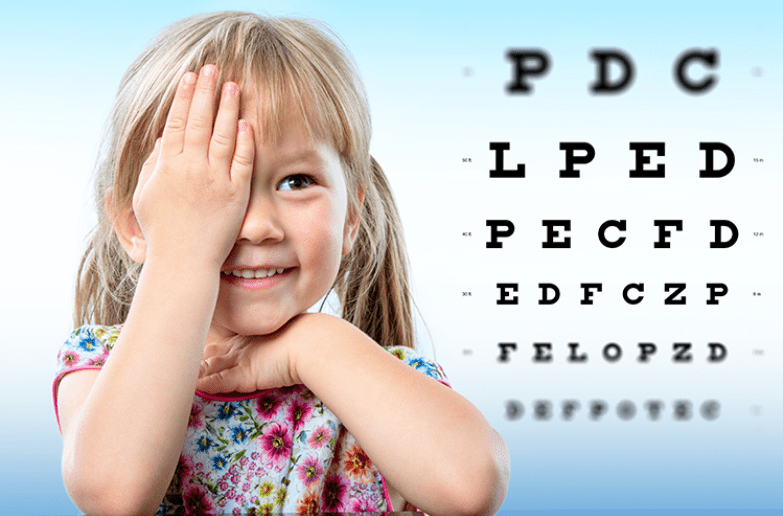
Here are twenty Eye-Opening facts for Children; show them
The eyes are an organ that allows humans to have vision and see things.
Humans have two eyes, the left eye and the right eye.
The human eye has around two million working parts to help you see.
Eyes are part of the sensory nervous system, which is part of the human nervous system.
The human eye can tell the difference between about 10 million colours.
The average height of an adult human eye is 0.93”.
The average width of an adult human eye is 0.95”.
The average depth of an adult human eye is between 0.86 and 0.97”.
The average human eye weighs less than an ounce (0.98 oz.).
The human eyeball reaches it full size by the age of 12 years old.

There are three layers or coasts that make up the human eye and they are the outer layer (fibrous tunic), the middle layer (vascular tunic) and the innermost layer (retina).
The outer layer of the eye (fibrous tunic) contains the cornea and the sclera.
The middle layer of the eye (vascular tunic) contains the choroid, ciliary body, iris and the pigmented epithelium.
The innermost layer of the eye contains the retina and blood vessels.
The human eyes blink between 15 and 20 times a minute. That means you blink up to 1,200 times per day and over 10.5 million times a year.
Someone who is shortsighted has an eyeball that is larger than normal and is unable to see things clearly far away.
Someone who is farsighted has an eyeball that is shorter than average and is unable to see things clearly close-up.
The human eyes can be one of sixteen different colours according to the Martin scale that has eye colours from light blue to dark brown-black.
The most common eye colour worldwide is brown.
A human can have two different colour eyes, and this is called heterochromia iridium or heterochromia iridis.
Discover more from Vigyan Setu Foundation
Subscribe to get the latest posts sent to your email.

