
Theme: Complex Pasts: Diverse Futures


United Nations Educational, Scientific and Cultural Organization (UNESCO) select monuments or sites that have cultural, historical, natural, scientific or other form of significance, legally protected by international treaties. Landmark sites of cultural and natural importance as recognised by UNESCO are offered special care and preservation and termed World Heritage Sites. These sites are the elements of protection, recognition and risk, portray diversities in geological and biological landscapes and are of interest to the global communities.
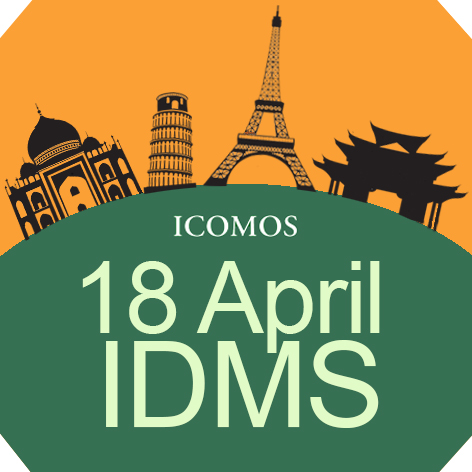
UNESCO set up International Council on Monuments and Sites (ICOMOS) on 18 April 1983 aimed at raising awareness about the heritage sites, their diversity, their vulnerability and finding means and ways required to protect them for future generations. Globally, April 18 is celebrated as World Heritage Day aka International Day for Monuments and Sites being organized by ICOMOS.
How is the heritage sites selected? As per the revised Operational Guidelines for the Implementation of the World Heritage Convention, there is a set of ten criteria followed for selection of the World Heritage Site. This includes;
- to represent a masterpiece of human creative genius;
- to exhibit an important interchange of human values, over a span of time or within a cultural area of the world, on developments in architecture or technology, monumental arts, town-planning or landscape design;
- to bear a unique or at least exceptional testimony to a cultural tradition or to a civilization which is living or which has disappeared;
- to be an outstanding example of a type of building, architectural or technological ensemble or landscape which illustrates (a) significant stage(s) in human history;
- to be an outstanding example of a traditional human settlement, land-use, or sea-use which is representative of a culture (or cultures), or human interaction with the environment especially when it has become vulnerable under the impact of irreversible change;
- to be directly or tangibly associated with events or living traditions, with ideas, or with beliefs, with artistic and literary works of outstanding universal significance. (The Committee considers that this criterion should preferably be used in conjunction with other criteria);
- to contain superlative natural phenomena or areas of exceptional natural beauty and aesthetic importance;
- to be outstanding examples representing major stages of earth’s history, including the record of life, significant on-going geological processes in the development of landforms, or significant geomorphic or physiographic features;
- to be outstanding examples representing significant on-going ecological and biological processes in the evolution and development of terrestrial, fresh water, coastal and marine ecosystems and communities of plants and animals;
- to contain the most important and significant natural habitats for in-situ conservation of biological diversity, including those containing threatened species of outstanding universal value from the point of view of science or conservation.
For any site to be included on the list, it must meet at least one of the ten selection criteria. As per June 2020, there are 1121 World Heritage Sites, worldwide. Countries with twenty five or more World Heritage Sites are China and Italy (55 sites each), Spain (48 sites), Germany (46 sites), France (45 sites), India (38 sites), Mexico (35 sites), United Kingdom (32 sites), and Russia (29 sites).
Heritage sites are of two different types; cultural and natural. Tangible cultural heritage sites include historical buildings and places associated with science or technology, archaeology, architecture, or some specific culture, while intangible cultural heritage sites refers to the expressions, knowledge, skills, as well as instruments, arts associated with the community or group of people that need to be protected for the generations to come. However, natural heritage sites refer to the flora, fauna, ecosystem and geographical structure. As mentioned, India has 38 World Heritage Sites including 30 cultural, 07 natural, and 01 mixed site.
Celebration of rich cultural past on World Heritage Day involves young and old, alike. A number of recreational activities are planned; from storytelling to speeches, from essay writing to drawing, from site visits to slideshows, from photography to heritage festivals to mention a few.
One of the key functional areas of Vigyan Setu Foundation is to promote our scientific heritage using science tourism as a communication tool. Today, when the world is facing COVID-19 pandemic, restricting the physical movements and limiting the scope of gatherings, the best option to celebrate World Heritage Day is through virtual mode. That’s what Vigyan Setu Foundation has planned. Through the link given below you can share your experiences and/or views about the heritage sites. Analysis of your responses would enable us to design awareness campaign and take the movement of protecting our heritage further for the sake of future generations.


Leave a Reply